Boosting Brand Revenue by 40% with New Customer Purchase Optimization
Change in optimization strategy helped us increase our revenue by 40%
About the
Brand
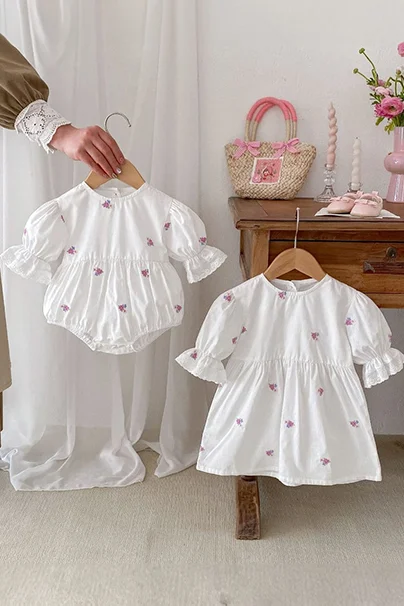
Babyboo offers a curated selection of adorable and comfortable designer baby clothes and accessories, crafted with soft, breathable fabrics for precious little ones.
Objective
Scaling a babycare brand with continuous acquisition of new customers by optimizing the ads based on nCAC (Custom Conversion Event) instead of CAC.
Background
In Adbuffs a few months back, we started using the custom server-side event to track new customers, nCAC and new customer conversion value as we wanted to acquire new customers more accurately. Only with increase in new customer acquisition and maintaining the repeat rate can we scale the brand successfully.
In the month of April, we installed the same for one of our brands and noticed improvement.
Challenges
The brand is having 30% repeat rate . The dependency on repeat purchases was very high. So, if we don’t find a way to have consistent inflow of new customers the brand will become stagnant after a point of time.
Data Loss with Shopify CAPI. Shopify’s native CAPI doesn’t account for custom order specific or user specifc or demographic specific data points tracking. This can result in the wrong optimisation on Ad Manager dashboard
Optimization
We shifted our optimization focus from Customer Acquisition Cost (CAC) to New Customer Acquisition Cost (nCAC) on the Facebook dashboard. This strategic change allowed us to better target and acquire new customers more efficiently.
Key Metric: Kill nCAC
To determine the threshold for our optimization efforts, we established a ‘kill nCAC’—the nCAC value at which we would pause any underperforming ads.
Here’s how we calculated it:
First-Time Customer AOV for the Last 30 Days: ₹3,220
Required ROI: 4.0
Kill nCAC Calculation:
Kill nCAC= First-Time Customer AOV/ Required ROI
=3220/4
=₹805
Buffer and Final Kill nCAC:
Upon reviewing our best-performing ads, we noticed that the nCAC typically ranged between ₹820 and ₹840. To account for variability, we added a buffer of ₹20 and set our final kill nCAC at ₹825.
We wanted to train Facebook’s machine learning algorithm to optimize based on nCAC.
Results & Analysis
The brand is having 30% repeat rate . The dependency on repeat purchases was very high. So, if we don’t find a way to have consistent inflow of new customers the brand will become stagnant after a point of time.
Data Loss with Shopify CAPI. Shopify’s native CAPI doesn’t account for custom order specific or user specifc or demographic specific data points tracking. This can result in the wrong optimisation on Ad Manager dashboard
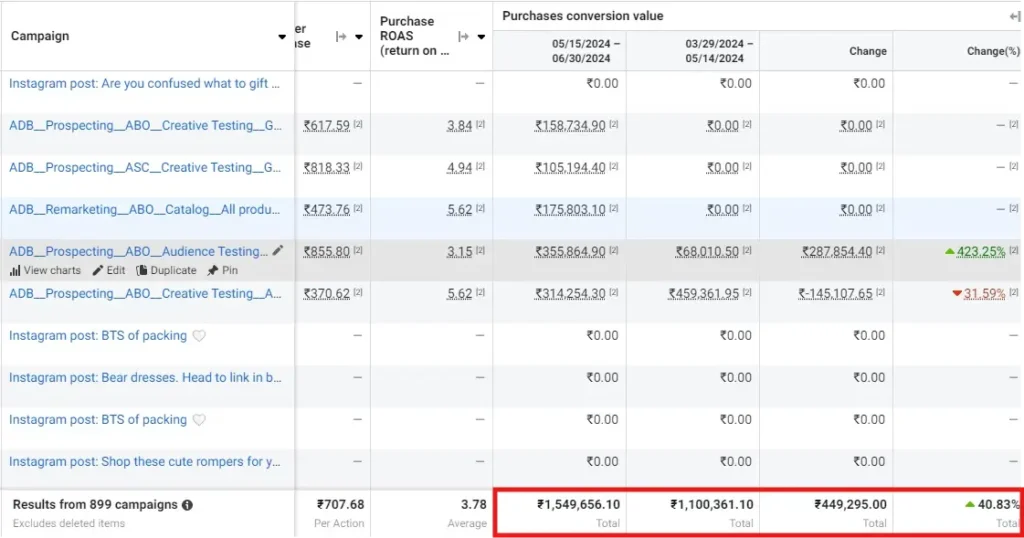
40% increase in Purchase Conversion Value since we started optimizing on the basis of nCAC:
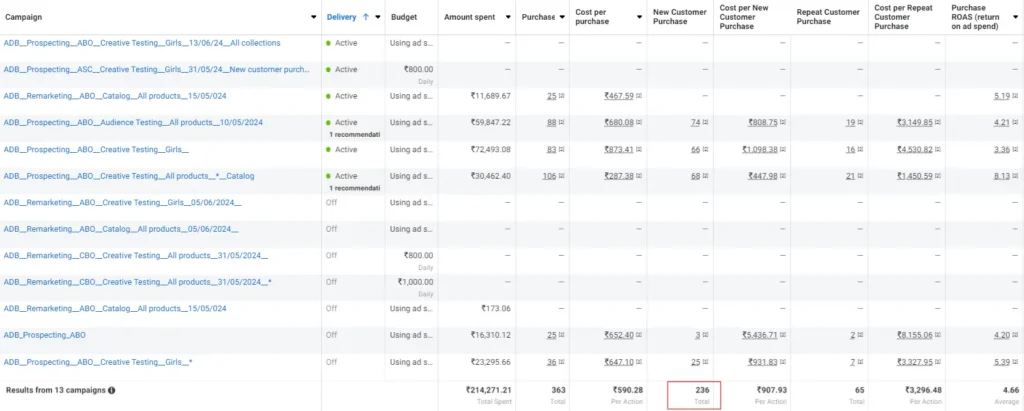
Increase in New Customer Acquisition %
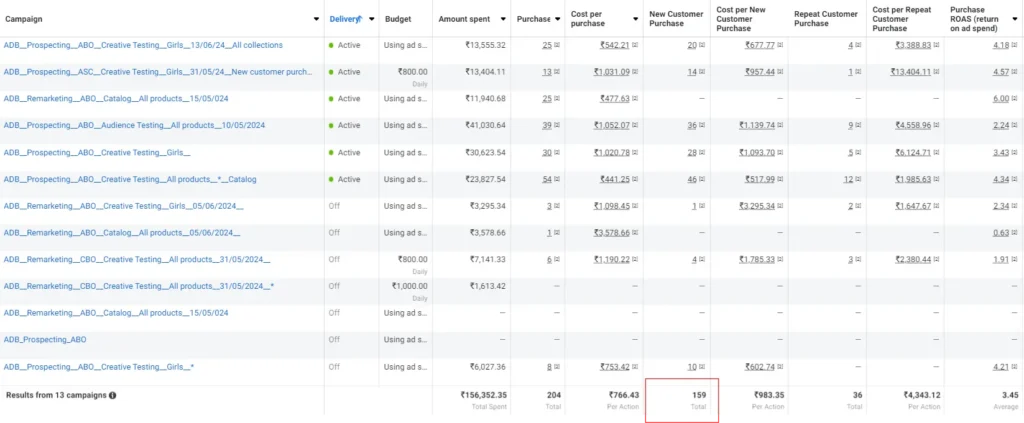
May month new customer purchase contribution: 65.01%
June month new customer purchase contribution: 78%
Finding: % contribution of new customers purchases increased from May to June
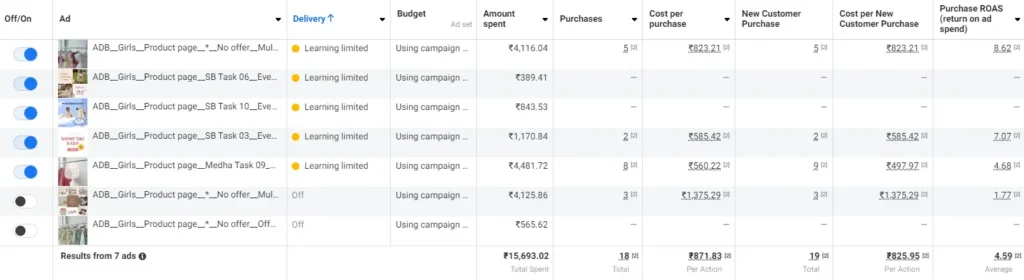
New Customer Purchase ASC Campaign performance vs Account average
We had launched an ASC campaign with conversion event set at New Customer Purchase on 31.05.24.
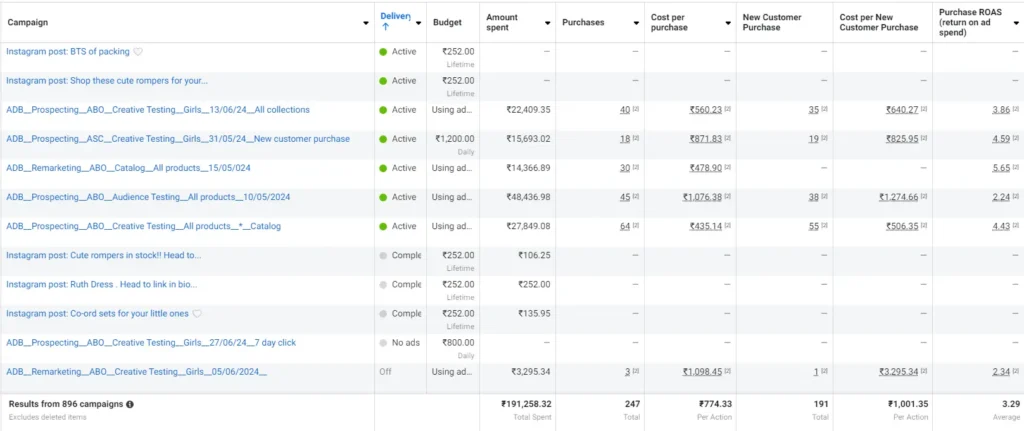
Account overview:
Findings
As you can see from the above 2 screenshots nCAC for our ASC campaign (825.9) & account average (1001.35). Thus we have achieved a reduction in nCAC by 17.5% through out New Cuatomer Purchase ASC campaign.
Also the ROAS of our campaign was 40% better than account average.
Week on Week performance of ASC (New customer purchase) campaign:
Findings
In the first week of launching the campaign we started with a nCAC of ₹1364. Each week we saw a gradual decrease in nCAC and in the last week of June we got a nCAC of ₹505.